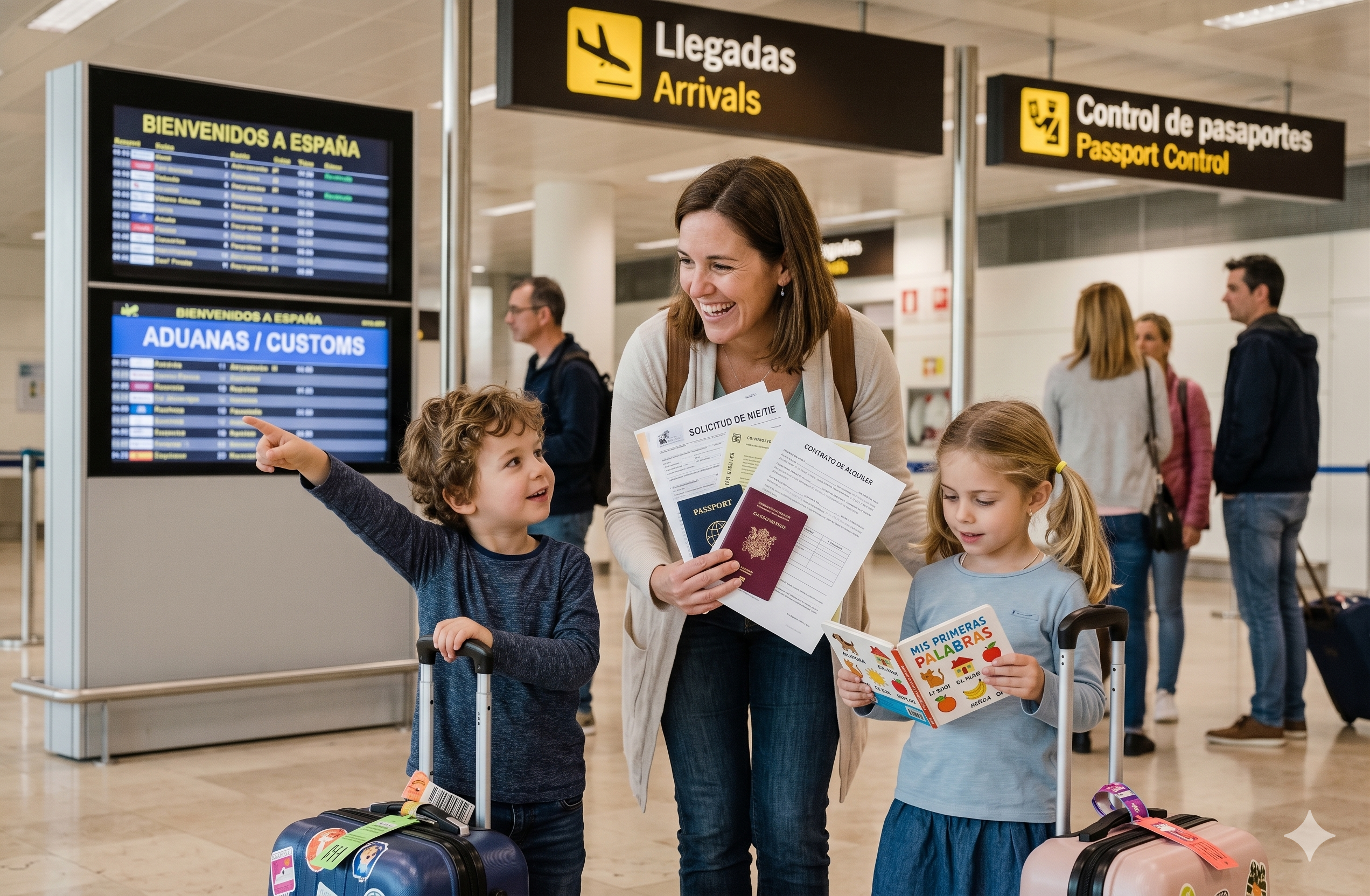
Moving your family to a new country is a massive adventure, but it also introduces a completely new set of daily responsibilities. For many expat mothers, the initial excitement of arriving in Spain can quickly give way to practical challenges. Suddenly, you need to navigate school enrollments, explain a fever to a local doctor, or handle administrative forms at the town hall.
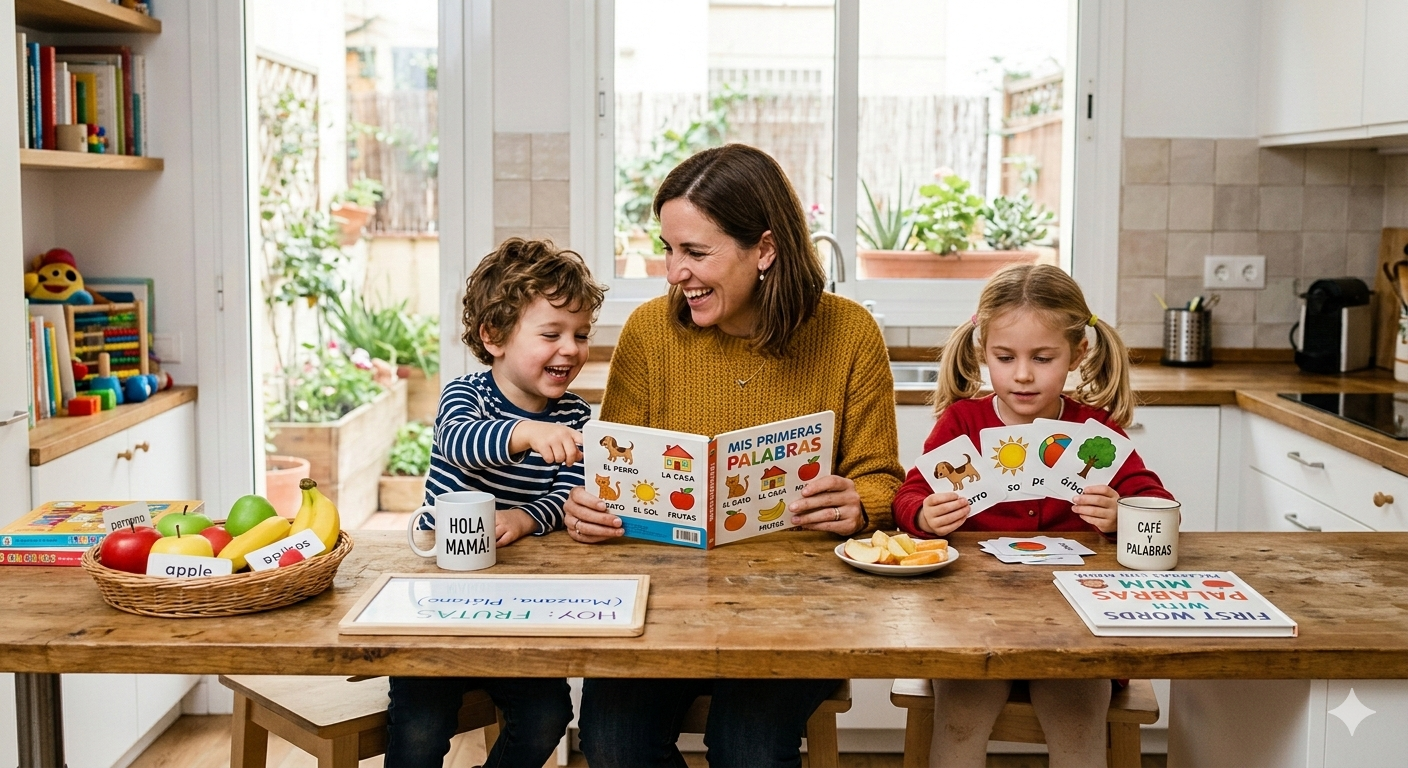
While everyday conversational Spanish is wonderful for buying groceries or ordering coffee, managing family logistics requires a specific set of words and phrases. You do not need to be completely fluent to run a smooth household in Spain. Instead, focusing on the core language building blocks for school, healthcare, and local bureaucracy will give you the control and confidence you need.
This comprehensive guide breaks down the essential vocabulary, cultural communication styles, and practical phrases that will help you manage family life in Spain effectively.
Living in Spain as an Expat Mum: The Core Language Mindset
Before memorizing vocabulary lists, it is helpful to understand how local communication works. In Spain, interactions are often warmer and more informal than in many Anglo-Saxon or Northern European cultures. People frequently use first names, ask about your children, and speak with a lot of hand gestures.
Many mothers feel self-conscious about making grammatical errors when speaking to school staff or officials. However, local communities are generally welcoming and appreciate any genuine effort to communicate in their language. Clear, functional communication is always more important than perfect grammar.
When you approach administrative or educational situations with a cooperative mindset, you will find that local teachers, doctors, and clerks are usually willing to help you find the right words.
School Phrases in Spanish for Navigating the Education System
The local education system has its own unique terminology and communication channels. Understanding these terms will help you stay informed about your child’s academic and social progress.
Understanding «Tutorías» and School Structure
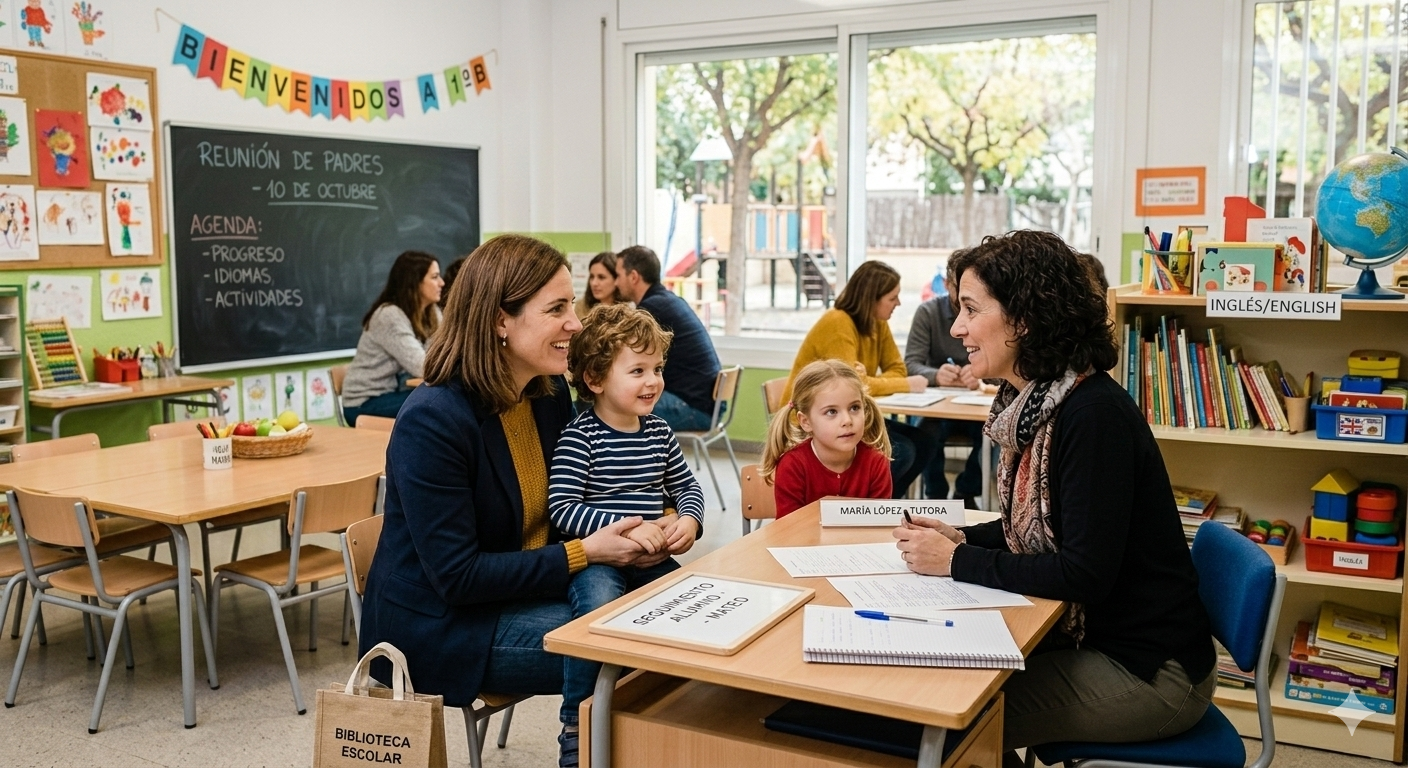
In Spanish schools, parent-teacher meetings are called tutorías. These are usually one-on-one sessions held with your child’s primary class teacher, known as the tutor or tutora. Unlike highly structured parent conferences in other countries, a tutoría can feel much more conversational and informal.
Teachers use these meetings to discuss your child’s academic progress, their participation in class, how well they interact socially with classmates, and any specific areas where they might need extra help.
Our Guide to Surviving Your First Spanish Tutoría
Essential Spanish Vocabulary for School
Here is a breakdown of the key educational terms you will encounter regularly:
| English Term | Spanish Translation | Context / Usage |
| Parent-teacher meeting | La tutoría | The official one-on-one meeting with the main teacher. |
| Main teacher / Tutor | El tutor / La tutora | Your primary point of contact for your child’s progress. |
| Homework | Los deberes | Daily assignments given to students to complete at home. |
| Term / Quarter | El trimestre | The school year is split into three terms (trimestres). |
| School dining hall | El comedor | The lunchroom or school lunch service. |
| Extracurricular activities | Las actividades extraescolares | After-school clubs, sports, or music lessons. |
| Report card / Grades | Las notas / Las calificaciones | The formal review of academic results at the end of a term. |
| School notebook / Communication diary | La agenda | A physical notebook used for daily notes between parents and teachers. |
Practical Phrases for Talking to Spanish Teachers
When you attend a tutoría or speak to staff at the school gates, having specific questions prepared keeps the conversation focused. Here are several essential phrases to use:
- «¿Cómo va mi hijo/a en clase?» – How is my child doing in class?
- «¿Tiene dificultades en alguna asignatura?» – Are they struggling in any subjects?
- «¿Cómo se comporta en clase y cómo es la participación?» – How is their behavior and participation in class?
- «¿Se integra bien con sus compañeros de clase?» – Does he/she integrate well with classmates?
- «¿Hay algo que podamos mejorar o trabajar en casa?» – Is there something we can improve or work on at home?
If a teacher is speaking too fast or using complex educational jargon, do not hesitate to ask them to slow down. You can use these clarifying phrases:
- «¿Podría repetirlo más despacio, por favor?» – Could you repeat that more slowly, please?
- «¿Puede explicarlo de otra manera?» – Could you explain it another way?
Keeping Up with Digital Communication
Many Spanish schools now rely heavily on technology to communicate with parents. You will likely need to download school-specific mobile applications or check email systems regularly to receive updates on homework expectations, behavior observations, and upcoming school evaluations. Staying proactive on these platforms demonstrates your commitment to your child’s education.
Spanish Bureaucracy Words for Smooth Admin Processes
Dealing with Spanish administrative systems is a necessary part of settling down as an expat family. The paperwork can seem complex, but understanding the exact names of the documents you need prevents unnecessary delays.
Official Spanish Government Portal for Foreign Residents
The Holy Trinity of Expat Admin: Padrón, NIE, and Tarjeta Sanitaria
There are three fundamental administrative elements every expat mother needs to handle:
- El Padrón (The Municipal Register): This is the town hall register that officially records where you and your family live. Getting your certificado de empadronamiento is crucial because it acts as official proof of address for almost every other process, including public healthcare registration and local school enrolment.
- El NIE / TIE (Foreigner Identification): The Número de Identidad de Extranjero (NIE) is your tax and identification number. The Tarjeta de Identidad de Extranjero (TIE) is the physical biometric card.
- La Tarjeta Sanitaria (The Health Card): Once you are registered on the padrón and have your social security details sorted, you must apply for this card at your local health center. It provides you and your children full access to the Spanish public healthcare system.
Essential Bureaucracy Vocabulary Table
Keep these terms handy whenever you visit a government office or fill out online applications:
| Spanish Term | English Meaning | Document Purpose |
| Cita previa | Prior appointment | Most offices will not see you without a pre-booked appointment slot. |
| Contrato de alquiler | Rental contract | Required as proof of address when registering on the padrón. |
| Libro de Familia | Family Book | An official document registering marriages and births (or equivalent foreign birth certificates). |
| Empadronamiento | Town hall registration | The process of adding your family to the city residency database. |
| Solicitud | Application form | The physical or digital form you must fill out for admin requests. |
| Fotocopia | Photocopy | Always bring physical copies of every document you submit. |
Phrases for Handling Administrative Appointments
When attending an administrative appointment, you can state your purpose clearly using these phrases:
- «Tengo una cita previa a las diez.» – I have an appointment at ten o’clock.
- «Quiero empadronar a mi familia.» – I want to register my family on the town hall municipal register.
- «Aquí tiene mi pasaporte y el contrato de alquiler.» – Here is my passport and the rental contract.
- «¿Qué documentos necesito para solicitar la tarjeta sanitaria de mis hijos?» – What documents do I need to apply for my children’s health card?
How to Avoid the Most Common Expat Bureaucracy Mistakes in Spain
Conclusion
Managing a family in a new country comes with a unique set of challenges, but mastering basic Spanish for parenting makes a world of difference. By focusing your energy on learning targeted phrases for school meetings, medical visits, and administrative processes, you can handle your household logistics efficiently.
Remember that perfection is not the goal. Local teachers, administrative workers, and healthcare professionals are there to collaborate with you to ensure your children remain healthy, happy, and successful in their new environment. Take it one step at a time, prepare your key phrases in advance, and watch your confidence grow as you build your family’s new life in Spain.
Need Extra Support Settling into Spanish Life?
Navigating the local school system, handling town hall appointments, and managing official translations can feel overwhelming when you are doing it all alone. We specialize in helping expat families transition smoothly into their new life in Spain.
Contact us today for a personalized consultation to see how we can assist you with school selection, administrative paperwork, and local integration strategies so you can focus entirely on enjoying this journey with your children.